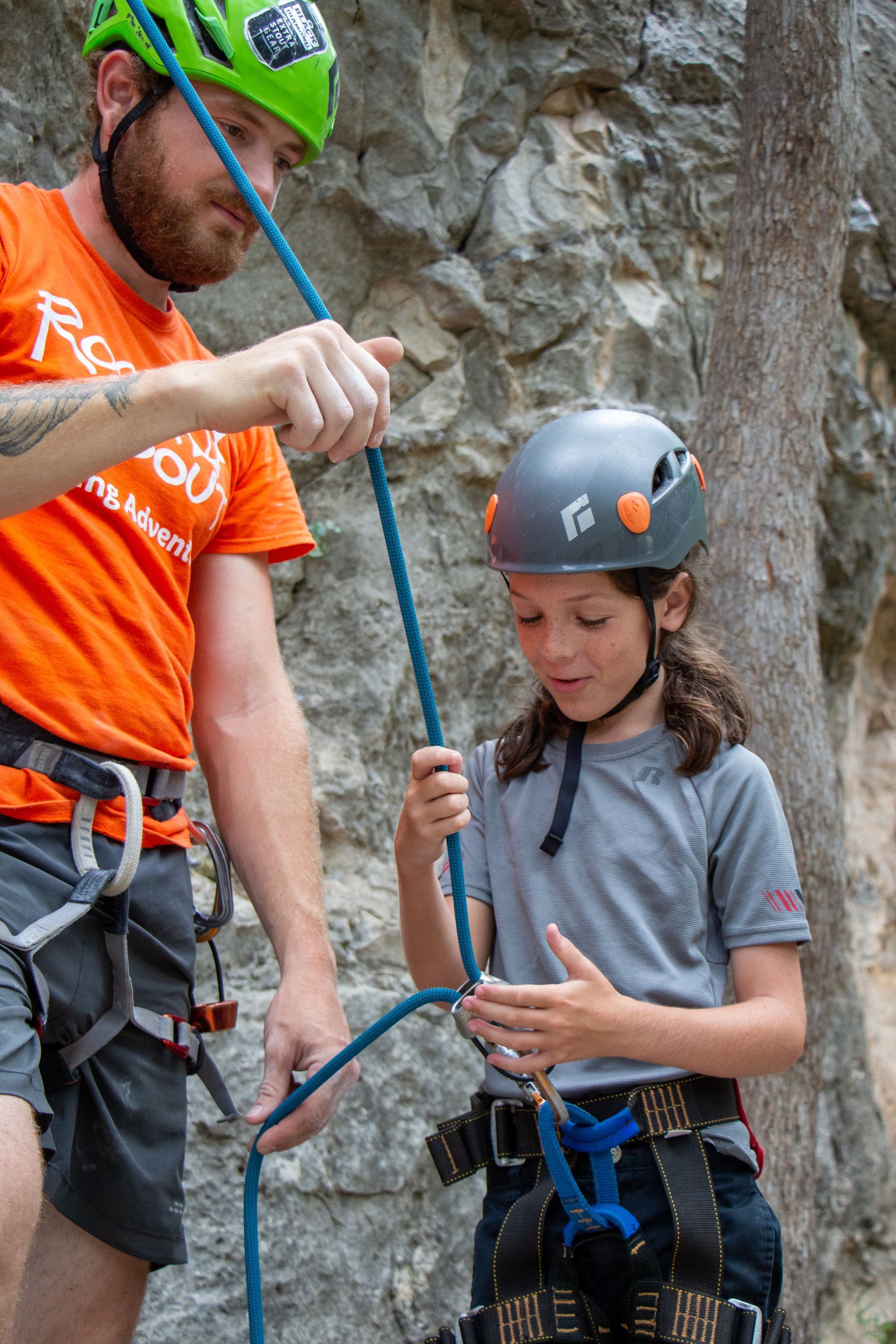
Hangboard and Finger Training for Climbers: Protect Your Fingers

Rock-About Climbing Adventures • July 31, 2026

Ask experienced climbers what finally moves the needle on hard routes and most will say the same thing: finger strength. It is also the one area of climbing where enthusiasm does the most damage, because fingers get strong slowly and get injured fast.

This guide explains how a hangboard workout actually works, how to know whether you are ready to start, and the two finger protocols most climbers use, all with the caution the tissue demands. The goal is stronger fingers that stay healthy, not a quick gain followed by six weeks off with a strained pulley.

The short version: A hangboard is a mounted training board with edges of different depths that you hang from to build finger strength. The two core protocols are max hangs, short heavy hangs for maximum strength, and repeaters, sets of shorter hangs for strength endurance. Both work only after a full warm up, only if you have a solid climbing base, and only when you stop well short of pain. Beginners should build finger strength by climbing first, not by hangboarding.

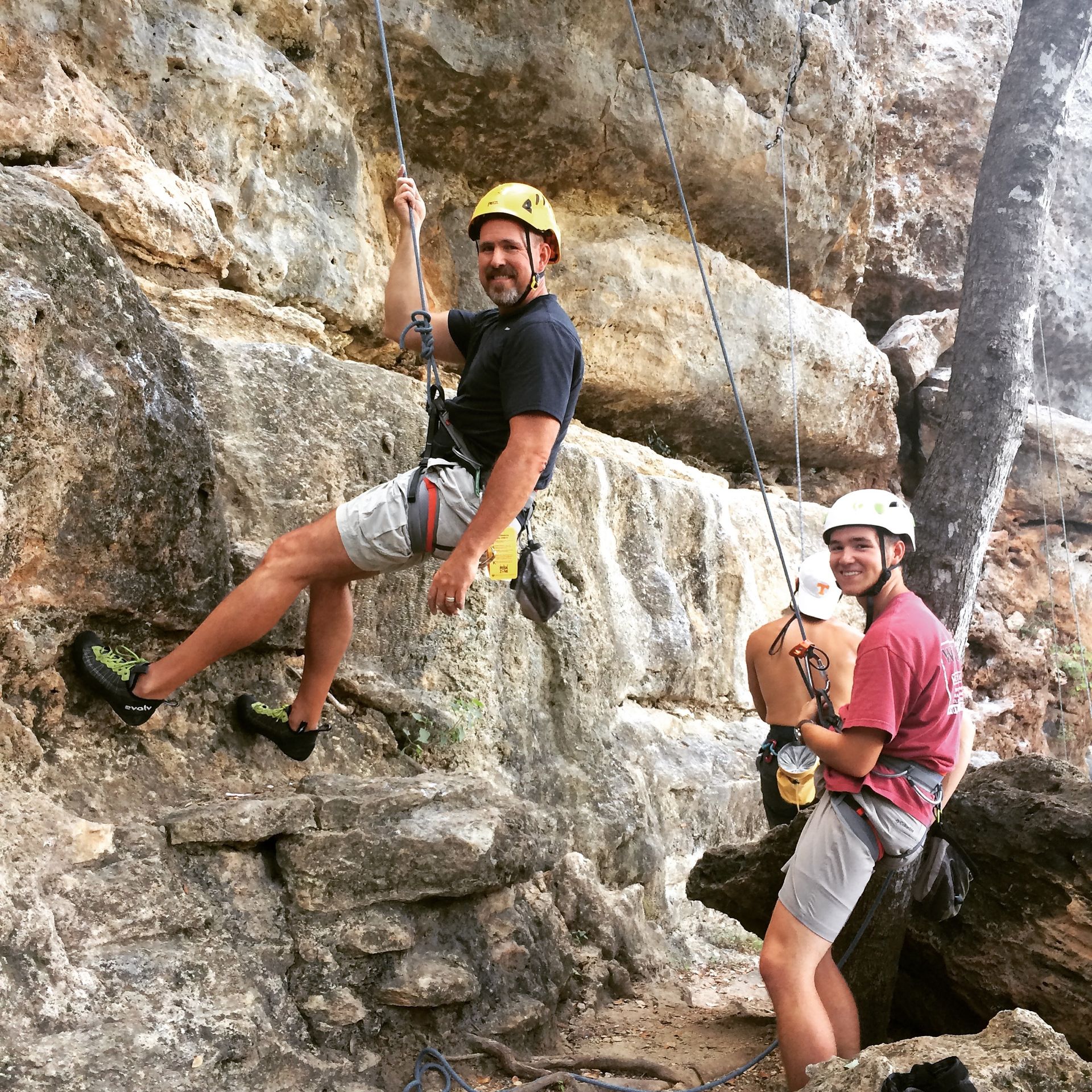
We have guided climbers in Central Texas since 2001, and our AMGA-certified guides will tell you the same thing every good coach does: the strongest, most durable fingers are usually built on real rock long before anyone touches a hangboard.

What Is a Hangboard, and What Is a Hangboard Workout?

A hangboard, sometimes called a fingerboard, is a board mounted above a doorway or on a wall with a range of holds: jugs you can wrap your whole hand around, and progressively smaller edges that force your fingers to do the work. A hangboard workout is a set of controlled, timed hangs from those edges, designed to load the finger tendons and the muscles in your forearms in a measured, repeatable way.

The value is precision. On real rock, the holds are whatever the route gives you. On a hangboard, you choose the exact edge depth, the exact hang time, and the exact rest, which lets you add small amounts of load over weeks. That control is also the risk: it is very easy to load fingers harder than they are ready for.

Are You Actually Ready to Hangboard?

This is the most important section, and the one most articles skip. Fingers adapt more slowly than muscles. Your forearms may feel ready long before your tendons and pulleys are.

A reasonable readiness checklist before you start structured hangboarding:


  • You have been climbing consistently for at least a year. Newer climbers gain finger strength faster and more safely just by climbing.
  • You have no current finger, elbow, or shoulder pain. Train the injury away first, not through it.
  • You can already warm up properly. If you are not sure how, start with our climbing warm-up routine.
  • Your climbing is plateauing specifically because of grip, not technique. Most sub-plateau climbers improve faster by climbing more and climbing smarter.

If you are newer than that, the best finger training is time on the wall. The Beginner Rock Climbing Course builds real finger and body strength on actual holds, with a guide keeping the load appropriate, which is exactly the base you want before any board work.

 Not sure whether hangboarding is right for where you are? A guided day is the fastest way to get an honest read on your climbing. On the Lead Rock Climbing Course, an AMGA-certified guide sees your movement and grip under real conditions and can tell you whether your ceiling is fitness or technique, before you spend months on a protocol you may not need. All gear is included.

The Two Core Hangboard Protocols

Almost every finger-training plan is built on two protocols. Both are done only after a complete warm up, including easy climbing or light hangs.

  • Max hangs (maximum finger strength): Short hangs of roughly 7 to 10 seconds on an edge you can just hold, with long rests of 2 to 3 minutes between hangs, and only a handful of hangs total. Best for climbers whose limit is raw grip strength.
  • Repeaters (strength endurance): Sets of shorter hangs, for example 7 seconds on and 3 seconds off, repeated for several reps per set, with rest between sets. Best for climbers who lose grip over long or sustained routes.

Two rules apply to both. First, effort should be hard but never maximal to the point of failure on the fingers. Second, quality beats volume: a few clean, well-rested hangs build more strength with less injury risk than many sloppy, fatigued ones. Most climbers train fingers two, at most three, times a week, never on back-to-back days.

Keep the specific loads conservative and progress slowly. If you want a structured plan, work with a coach or a reputable published program rather than guessing, especially for edge depth and hang intensity.

Finger Care and Injury Prevention

Finger injuries, especially to the pulleys that hold the tendons against the bone, are the most common serious injury in climbing. Almost all of them are avoidable.


  • Warm up fully every time. Cold fingers on a small edge is the classic setup for a strain. See the warm-up routine.
  • Never train through finger pain. Sharp pain, or a pop, means stop. Fingers do not push through the way muscles can.
  • Avoid the full crimp under heavy load when training. An open-hand or half-crimp grip is generally kinder to the pulleys.
  • Progress slowly. Add a little load or a little time across weeks, not within a session. Tendons adapt on a slower clock than you feel.
  • Deload regularly. Take easier weeks. Chronic finger soreness is a warning, not a badge.
  • See a professional for real pain. A tweaky finger that lingers is worth a physiotherapist who knows climbers, not another session.

Do You Even Need a Hangboard?

Here is the honest answer most gear articles will not give you: for the majority of climbers, no, not yet. Climbing itself is an excellent finger-strength stimulus, and it builds the technique that lets you use that strength. A hangboard becomes worth it when climbing alone is no longer enough to progress your grip, which is usually a few years in.

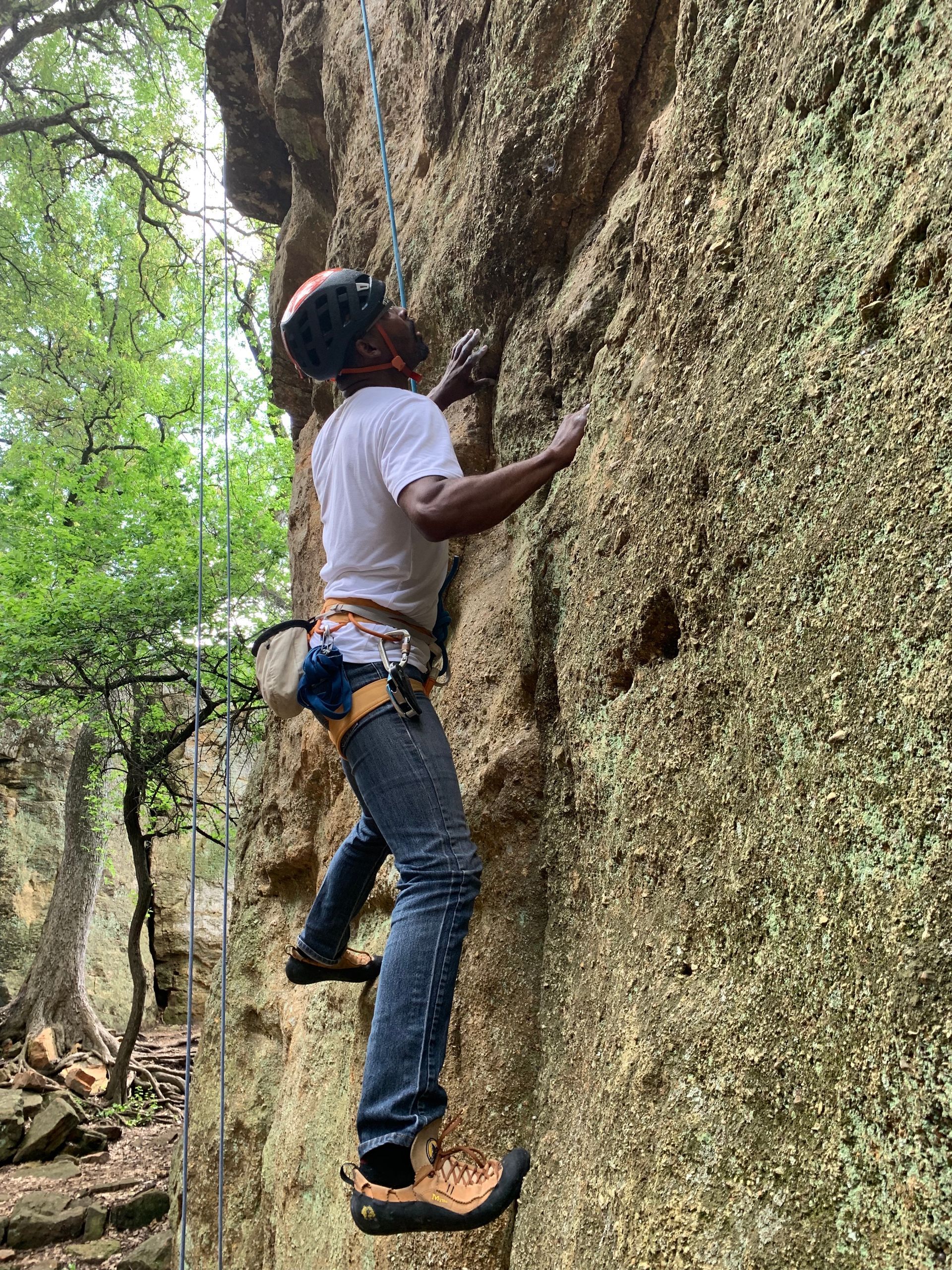
Central Texas is a good place to build strong fingers the natural way. The pockets and edges of the limestone at Reimer's Ranch and the routes across our advanced courses and clinics ask your fingers for exactly the kind of varied, real-world load that a board only approximates. If your fingers are your limiter, the fastest safe progress for most climbers is more quality climbing, with hangboarding as a targeted supplement once you have the base for it.

For the broader picture of climbing fitness beyond fingers, our guides' 14 home exercises for outdoor climbing and the breakdown of what muscles climbing works round out a training plan that keeps your whole body, not just your hands, ready for the rock.

Frequently Asked Questions

How often should I do a hangboard workout?

Most climbers train fingers two, at most three, times a week, never on consecutive days. Finger tendons adapt more slowly than muscles, so they need full recovery between sessions. If your fingers feel chronically sore, you are training too often or too hard and should back off.

When should a climber start hangboarding?

A common guideline is at least a year of consistent climbing with no current finger pain, and only when grip strength, not technique, is clearly holding you back. Newer climbers build finger strength faster and far more safely just by climbing regularly.

Can beginners use a hangboard?

It is generally not recommended. Beginners gain finger strength quickly through climbing itself, and their tendons have not yet adapted to concentrated hanging loads. The safer path is to climb regularly first. A guided beginner course builds that base with the load kept appropriate.

Does hangboarding actually make you a better climber?

It can, once you are ready for it, by raising the ceiling on how small a hold you can hold. But finger strength without technique rarely translates to harder routes. For most climbers below their plateau, time on real rock improves climbing faster than board training.

Build Finger Strength on Real Rock First

Now that you know how a hangboard workout works and, just as important, when it is worth doing, the smartest next step is making sure your foundation is solid. On the Lead Rock Climbing Course, an AMGA-certified guide reads your movement and grip on real Central Texas rock and helps you see whether stronger fingers or sharper technique is your real path forward, with all the gear included. Strong fingers matter, but knowing what to train matters more.

Scout troop rock climbing with AMGA-certified guides in Central Texas
August 7, 2026
Why guided rock climbing works as team building for scout troops and school groups in Texas: AMGA-certified guides, gear provided, from $85 per person.
By Rock-About Climbing Adventures July 29, 2026
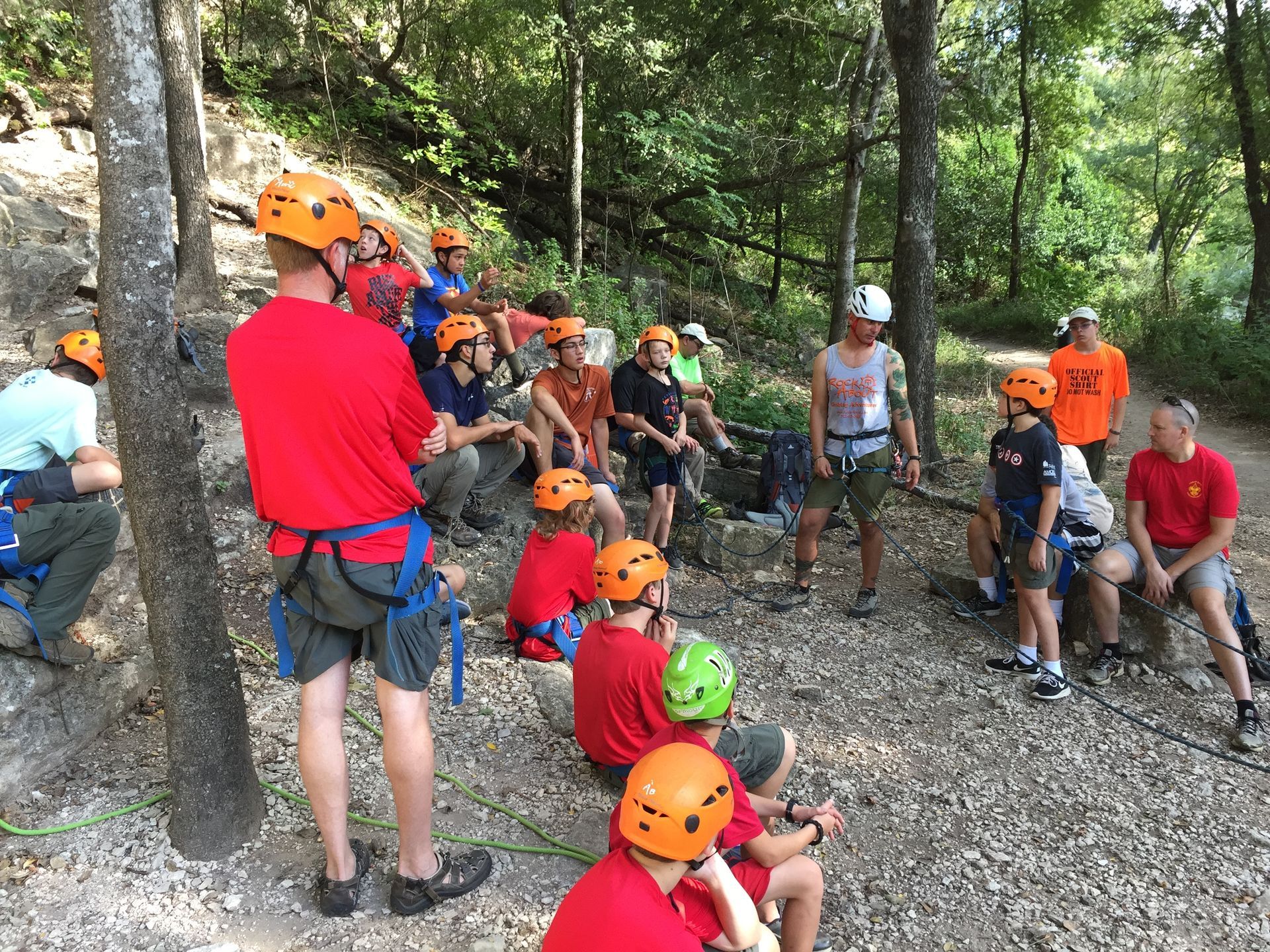
Climbing commands keep you safe. Learn the full set of climber-belayer calls in order, from On belay to Take to Rock, and how to respond to each one.
By Rock-About Climbing Adventures July 28, 2026
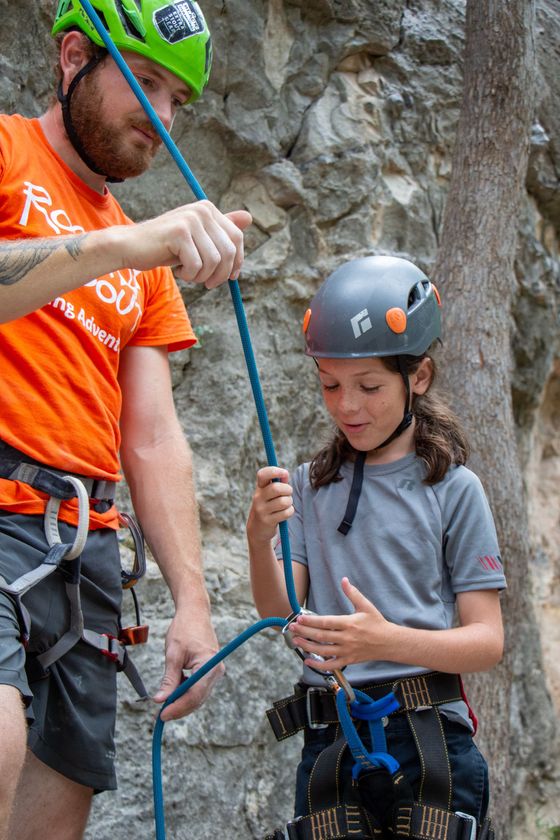
Learn the essential rock climbing knots our AMGA-certified Texas guides teach, from the figure 8 to the Prusik, with what each is for and when to use it.
By Rock-About Climbing Adventures July 27, 2026
A climbing warm-up routine that takes 10 minutes and protects your fingers, shoulders, and forearms, using the mobility and finger prep our AMGA guides use.
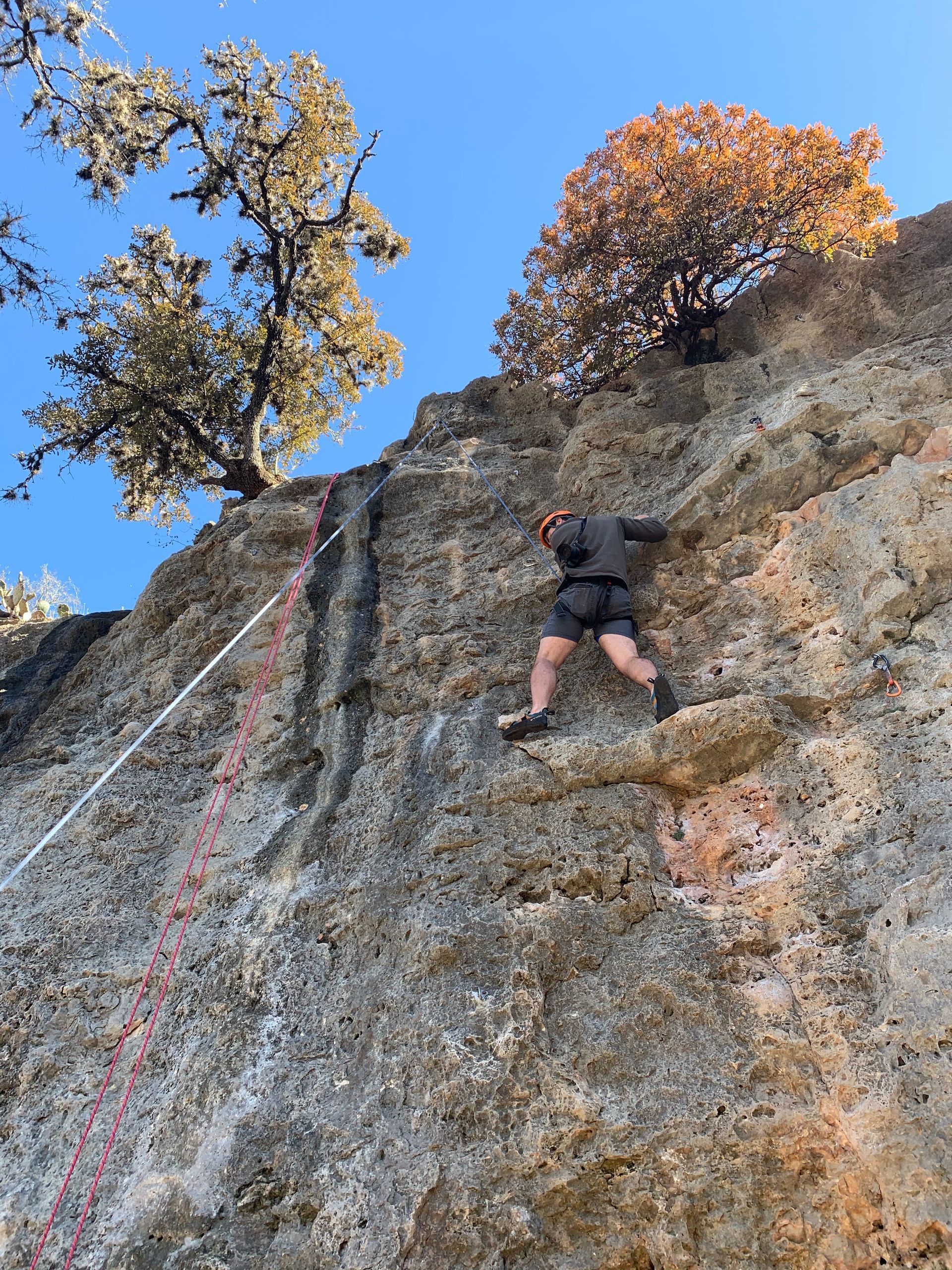
Outdoor rock climbing near Dallas-Fort Worth at Penitentiary Hollow, Lake Mineral Wells
July 24, 2026
Where to actually climb real rock near Dallas-Fort Worth: the closest outdoor crags, drive times, gym vs. outdoors, and guided trips at Lake Mineral Wells.
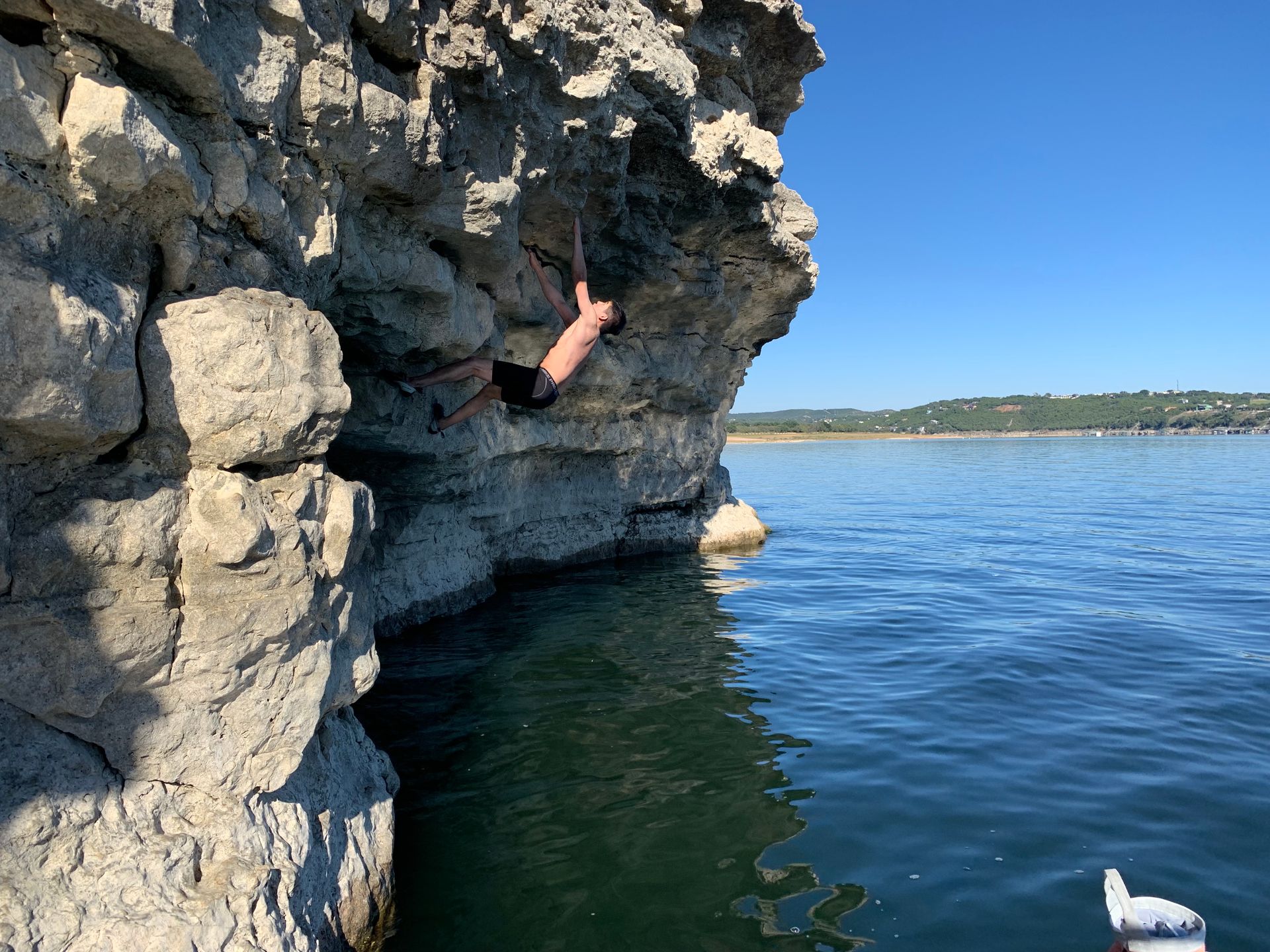
Person climbing a rocky cliff above calm blue water, with a white boat in the distance
July 24, 2026
Lake Travis just hit full pool for the first time since 2019, reopening deep water soloing terrain we haven't guided since 2018. No experience needed. Trips running now.

Kids climbing outdoors with a guide near Austin
June 29, 2026
A parent's 2026 guide to kids and teen rock climbing camps in Austin: ages, a typical day, safety, gear, and how to choose the right outdoor camp.
Beginner climber on limestone at the Austin Greenbelt
June 29, 2026
Five beginner-friendly routes and areas at Austin's Barton Creek Greenbelt, plus the gear, access, and safety basics you need for your first outdoor climb.
Climb in Texas
February 27, 2026
Discover the best time to climb in Texas. Learn why fall offers ideal conditions, how spring compares, and tips for winter and summer climbing.
Climbing at Enchanted Rock
February 26, 2026
Climb Enchanted Rock’s 300+ granite routes in Texas Hill Country. Get best seasons, rope tips, grades, and book guided tours with AMGA-certified experts.