Climbing Warm-Up Routine: Prevent Injury Before Every Climb
Most climbing injuries do not happen on the hardest move of the day. They happen on the first one, when a cold tendon gets asked to do something it was not ready for. A good climbing warm up is the cheapest insurance you can buy: ten to fifteen minutes that turn stiff, sleepy fingers into ready ones.
This guide walks through a simple, repeatable warm-up routine you can run at the crag or before a session, why each part matters, and the mistakes that quietly set climbers up for a strained pulley or a tweaked shoulder.
The short version: A climbing warm up should move through three stages in order. First raise your heart rate and body temperature for a few minutes. Then take your shoulders, hips, and wrists through their full range of motion. Finally wake up your fingers and forearms with easy, gradually harder climbing or light hangs. Never start on hard moves cold. The whole routine takes about 10 to 15 minutes.
We have guided climbers on real Central Texas rock since 2001, and the warm up is the part of the day our AMGA-certified guides never skip, no matter how experienced the group is. Here is how to build your own.
Why Warming Up Matters More in Climbing Than You Think
Climbing loads small tissues hard. Your finger tendons, the pulleys that hold them to the bone, and the connective tissue around your elbows and shoulders all take force that a cold body is not prepared to absorb.
When you warm up, blood flow increases, tissues become more elastic, and your nervous system starts firing the right muscles at the right time. Cold tissue is stiffer and tears more easily. That is the whole reason the first climb of the day should feel almost too easy.
Climbing is also a full-body sport, not just a finger sport. If you want the detail on that, our breakdown of what muscles rock climbing works shows why your back, core, and legs need to be in the warm-up too, not only your hands.
How Long Should a Climbing Warm-Up Take?
Plan on 10 to 15 minutes. Less than that and your fingers are rarely ready. Much more and you start eating into the energy you want for actual climbing.
The goal is not to get tired. It is to arrive at your first real climb feeling loose, warm, and slightly sweaty, with fingers that have already pulled on easy holds. On a cold morning at a shaded crag, lean toward the longer end. In Texas summer heat, your body warms fast and you can move through the general stages quicker, but never skip the finger prep.
A 3-Part Climbing Warm-Up Routine
Run these three stages in order. Each one prepares you for the next, so resist the urge to jump straight to hard pulling.
- 1. Pulse raiser (3 to 5 minutes): A brisk walk on the approach, an easy jog in place, arm swings, or a few minutes of movement until you feel warm. This raises your core temperature and blood flow so tissue becomes more elastic.
- 2. Mobility (3 to 5 minutes): Slow, controlled circles and swings for your shoulders, wrists, fingers, hips, and ankles through their full range. This loosens the exact joints climbing demands and primes the nervous system.
- 3. Finger and climbing prep (4 to 6 minutes): Easy climbing well below your limit, or light dead hangs, building gradually harder over several problems or routes. This wakes up the finger tendons and forearms under real, progressive load.
The approach hike to spots like Enchanted Rock or Reimer's Ranch often doubles as your pulse raiser, which is one quiet advantage of climbing outdoors. By the time you rack up, stage one is basically done.
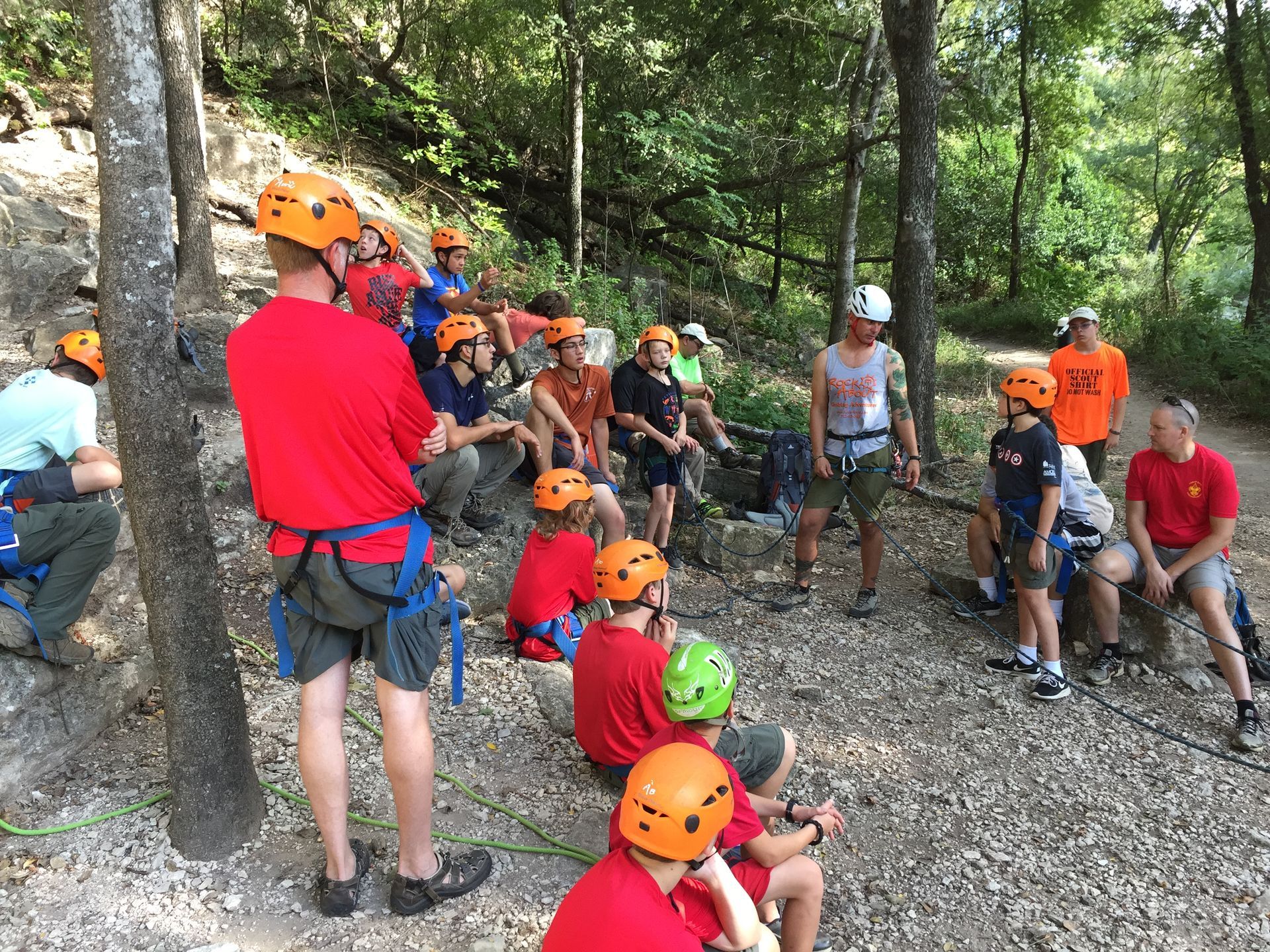
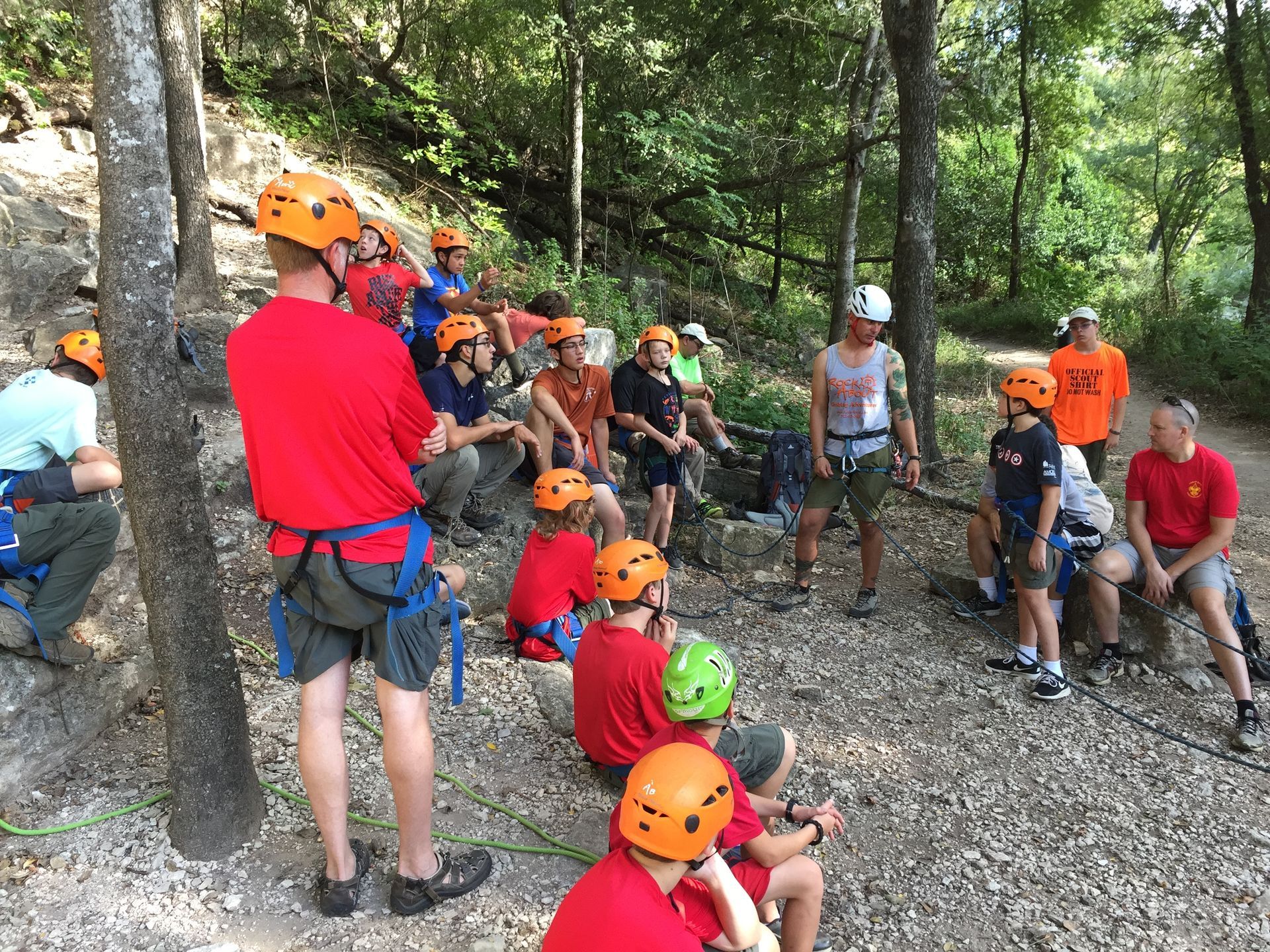
The easiest way to learn a good warm up is to watch a guide run one. On the Beginner Rock Climbing Course, your AMGA-certified guide walks the group through the full warm-up sequence before anyone ties in, then coaches your first climbs of the day. Gear is included, so you only need to bring yourself.
Finger and Forearm Prep: The Part Most Climbers Skip
The general warm up gets your body ready. It does not fully get your fingers ready, and fingers are where most climbers get hurt.
After your mobility work, spend a few minutes on gradually harder pulling. On real rock, that means climbing several easy routes or problems before touching anything near your limit. Each one should feel comfortable. If you use a portable hangboard to warm up before a route, keep the hangs light and short, because warm-up hangs are meant to prime the tendons, not train them.
If finger strength is your goal rather than just your warm up, that is a separate practice with its own rules. Our guide to hangboard workouts and finger training covers how to build finger strength safely without turning your warm up into a workout.
Warming Up at the Crag vs. the Gym
In a gym, warming up is easy: hop on the easiest wall and climb. Outdoors, the first climb of the day can be your project, and there is not always an easy route right next to it. That is where climbers get into trouble.
The fix is to plan your warm up into the day. Pick an easy route or two near your first hard climb and treat them as non-negotiable, even if it means a short walk. On a guided day, this is handled for you: our guides choose a warm-up progression that fits the crag, whether you are on the granite at Enchanted Rock or the limestone at Reimer's Ranch. If you are moving into harder terrain on the Lead Rock Climbing Course or an advanced clinic, a proper warm up matters even more, because the consequences of a cold slip are higher.
Common Climbing Warm-Up Mistakes
A few habits undo an otherwise good warm up:
- Starting on the hardest climb cold. The single most common cause of first-move finger and shoulder injuries. Always build up.
- Static stretching only. Long-held stretches before climbing do little to prepare tissue for load. Move through range instead, and save deep stretching for after.
- Skipping the fingers. A warm body with cold tendons is still a tweak waiting to happen. Include gradual, easy pulling every time.
- Over-warming. Twenty pumped forearm hangs before you climb is training, not warming up. Keep it light.
- No re-warm after a long rest. If you sit in the shade for an hour between climbs, do a quick re-warm before pulling hard again.
Frequently Asked Questions
How do you warm up for rock climbing?
Move through three stages in order: a few minutes of light movement to raise your body temperature, then mobility work for your shoulders, wrists, fingers, and hips, then several minutes of easy climbing or light hangs that build gradually harder. The whole routine takes about 10 to 15 minutes and should leave you loose, not tired.
How long should a climbing warm-up be?
About 10 to 15 minutes. Lean toward the longer end on cold mornings or before hard climbing, and toward the shorter end in warm weather. The point is to arrive at your first real climb warm and with fingers that have already pulled on easy holds.
Should I stretch before climbing?
Do dynamic mobility before you climb: controlled circles and swings that take joints through their range. Save long, static stretches for after your session, when they help recovery. Static stretching cold does little to prevent injury and can briefly reduce power.
Do I really need to warm up if I am just top-roping easy routes?
Yes. Cold tendons can get strained even on moderate holds, and a warm up costs only a few minutes. Beginners on the Beginner Rock Climbing Course warm up with their guide before every session for exactly this reason.
Ready to Climb With Warmed-Up Confidence?
Now that you know how to prepare your body before you pull on, the best next step is putting it to work on real rock with someone watching your form. On the Beginner Rock Climbing Course, your AMGA-certified guide runs the warm up with you, coaches your first climbs, and provides all the gear. It is the fastest way to build habits that keep you climbing for years, not sidelined for weeks.