Climbing Commands: Every Climber-Belayer Call You Need to Know
The first time you belay a friend or get lowered off a route, a handful of short words are the only thing connecting what you mean to do and what actually happens on the rope. Get them right and climbing feels smooth and safe. Get them muddled and a climber can lean back expecting tension that is not there. Climbing commands are how climbers and belayers stay on the same page, and they are simple to learn.
This guide covers every climbing command you need, grouped by the moment you use it: starting a climb, managing the rope, coming down, and the safety calls that matter most. Each one is a tiny script with a built-in response, so both people always know exactly where things stand.
The short version: Climbing commands are standard voice signals between a climber and a belayer that prevent accidents. Every command has a clear response, and nobody moves until both people have spoken. The core sequence is "On belay?" and "Belay on," then "Climbing" and "Climb on." From there you have rope calls like "Take," "Slack," and "Lower," and the safety calls "Falling," "Watch me," and "Rock."
What Are Climbing Commands?
Climbing commands, sometimes called climbing calls, are a small set of agreed-upon words that a climber and belayer use to communicate clearly while one of them is off the ground. They exist for one reason: safety. When a climber and belayer cannot see each other's hands, or are forty feet apart, plain conversation gets lost. A short, expected command does not.
The golden rule is that every command needs a spoken response before anyone acts. You do not start climbing because you assume your belayer is ready. You start climbing because they said "Climb on."
The Climbing Commands, in Order
Here is the full set in the order you will use them. Keep this where you can scan it until the calls become automatic.
- On belay? (Climber) Are you ready to catch a fall? Response: "Belay on."
- Climbing (Climber) I am starting up. Response: "Climb on."
- Slack (Climber) Give me a little loose rope. The belayer feeds slack.
- Up rope (Climber) Take in the extra rope. The belayer pulls slack.
- Take / Tension (Climber) Pull the rope tight, I want to rest. The belayer locks off.
- Ready to lower (Climber) Lower me to the ground. Response: "Lowering."
- Off belay (Climber) I am safe, take me off the system. Response: "Belay off."
- Falling (Climber) I am coming off, catch me. The belayer locks off.
- Watch me (Climber) A hard move is coming, pay close attention. The belayer watches closely.
- Rock (Anyone) Something is falling. Protect your head, do not look up.
Before You Climb: The Start Sequence
Every climb begins with the same four-part exchange. It takes five seconds and it is the single most important habit in roped climbing.
The climber asks "On belay?" which simply means "are you ready to catch my fall?" If you have ever wondered what does "on belay" mean, that is it: a question, not a statement. The belayer, once the rope and device are set and they are paying full attention, answers "Belay on."
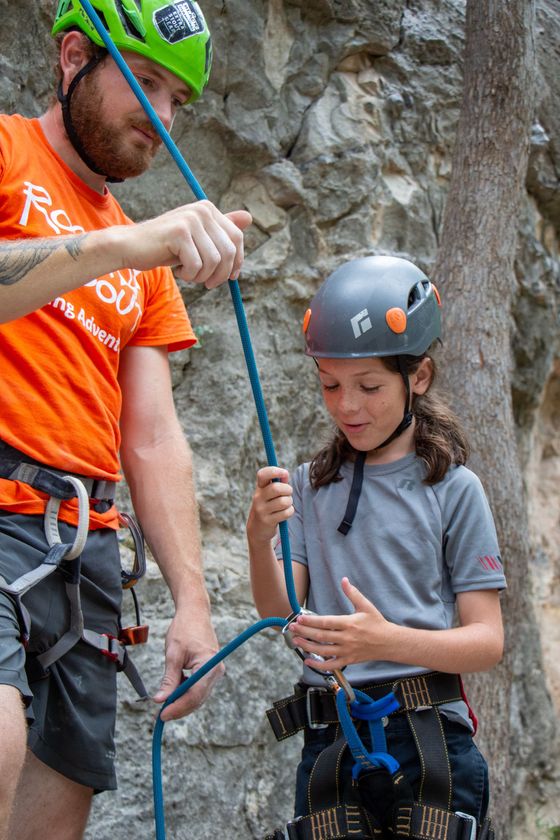
Then the climber says "Climbing," and the belayer confirms with "Climb on." Only now does anyone leave the ground. We teach this exact sequence on the very first morning of the Beginner Rock Climbing Course, before a single foot goes on the rock.
During the Climb: Managing the Rope
Once you are moving, a few rope calls keep the system tuned to what you need.
- Slack. You need a little loose rope, often to reach up and clip. The belayer feeds out a small amount.
- Up rope. There is too much slack. The belayer takes in the extra so a fall stays short.
- Take (or Tension ). You want to stop and rest. The belayer pulls the rope tight and locks off so you can sit back into your harness.
Clear rope calls matter most when you cannot see each other, which on outdoor routes is often. We will come back to that.
Resting and Coming Down
When you reach the top of a route, or you simply want off, the lowering exchange brings you down under control.
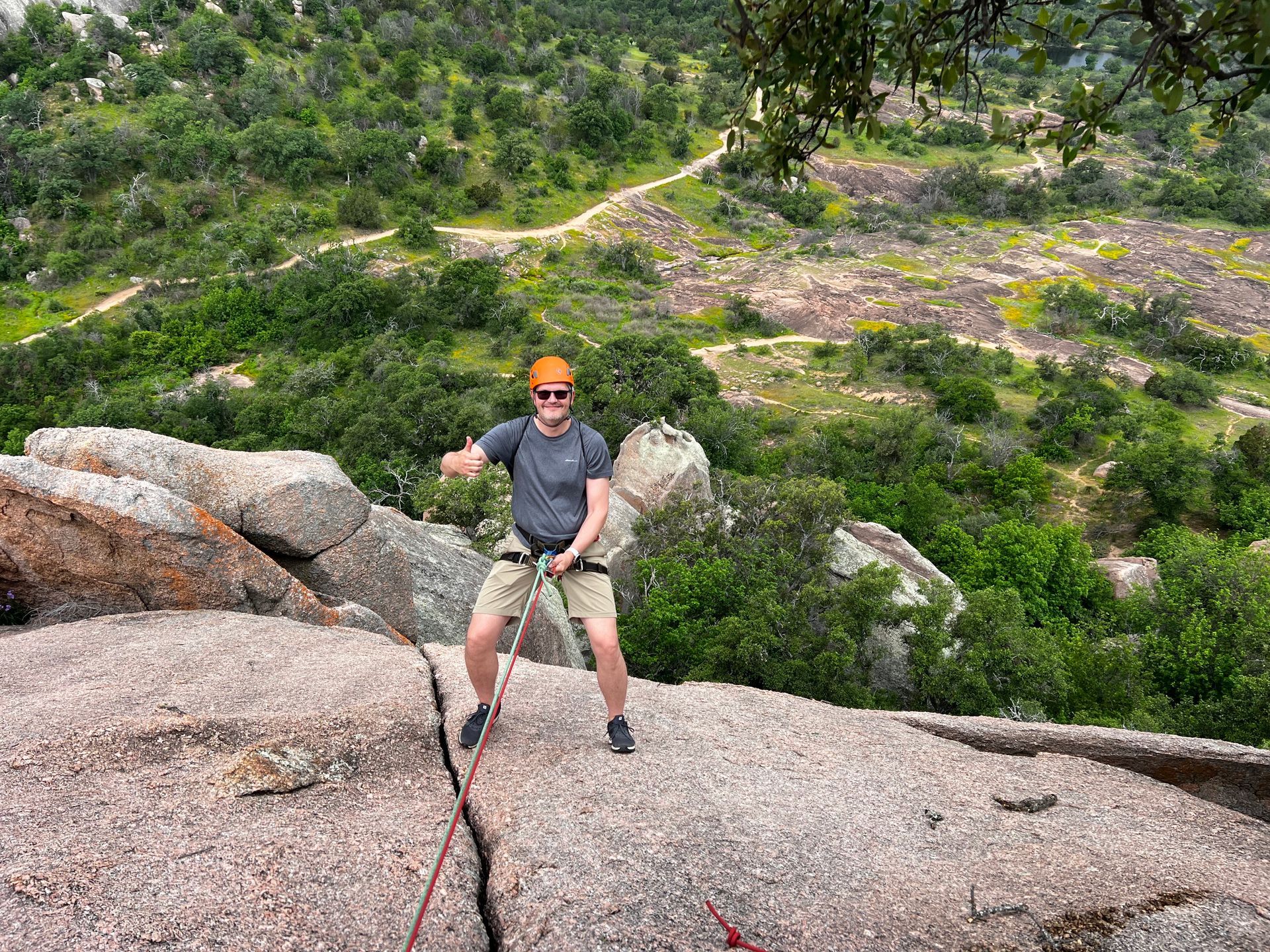
You call "Ready to lower," and the belayer answers "Lowering" before they let any rope move. Then you sit back in your harness, keep your feet on the wall, and the belayer feeds rope at a steady pace. This is the same controlled lower our guides walk every beginner through on real rock at Enchanted Rock.
Practice the calls where they count. Commands click into place when you use them on real rock with someone checking your form, not when you read them once. On the Beginner Rock Climbing Course, you run the full sequence with an AMGA-certified guide, climb real routes, and leave knowing exactly what to say and when. All the gear is included.
Finishing: Getting Off the Rope
Once you are standing safely on the ground, close the loop. The climber says "Off belay," meaning "I am safe, you can take me out of the system." The belayer removes the rope from the belay device and confirms with "Belay off."
Saying it out loud matters. It tells your belayer they can relax their attention and untie, and it prevents the confusion of a belayer breaking down a system while the climber still thinks they are protected.
Safety Calls Every Climber Must Know
Three calls exist purely for safety, and they override everything else.
- Falling. Shout it the instant you come off. It tells the belayer to lock off immediately and catch you. There is no shame in it; good climbers call it loud.
- Watch me. Use this when a hard, fall-likely move is coming. It tells the belayer to drop everything and watch the rope.
- Rock. Yell this the moment anything falls, whether it is a pebble, a dropped carabiner, or a water bottle. If you hear "Rock," press in toward the wall, keep your helmet on, and do not look up.
These calls are short on purpose. In a real moment you want one clear word, not a sentence.
Communicating Outdoors When You Cannot Hear Each Other
This is where outdoor climbing differs from the gym, and where many new climbers get caught out. On real rock, wind, distance, running water, and other parties can swallow a command whole. A belayer at the base of a tall route may genuinely not hear "Take."
A few habits fix it:
- Add your partner's name to the front of each call, so "Take" becomes "Sarah, take." It cuts through noise and avoids reacting to another party's commands.
- Agree on rope-tug signals before you climb, for moments when voice fails entirely. Three sharp tugs can mean "off belay," for example, as long as you both agreed on it first.
- Carry two-way radios on long or windy routes. Guides and experienced parties use them constantly.
Because we climb outdoors on real Central Texas rock, this is exactly the kind of judgment our guides build into every course. It is also why the habits you learn with us transfer straight to the crag, not just the gym wall.
How We Teach Commands at Rock-About
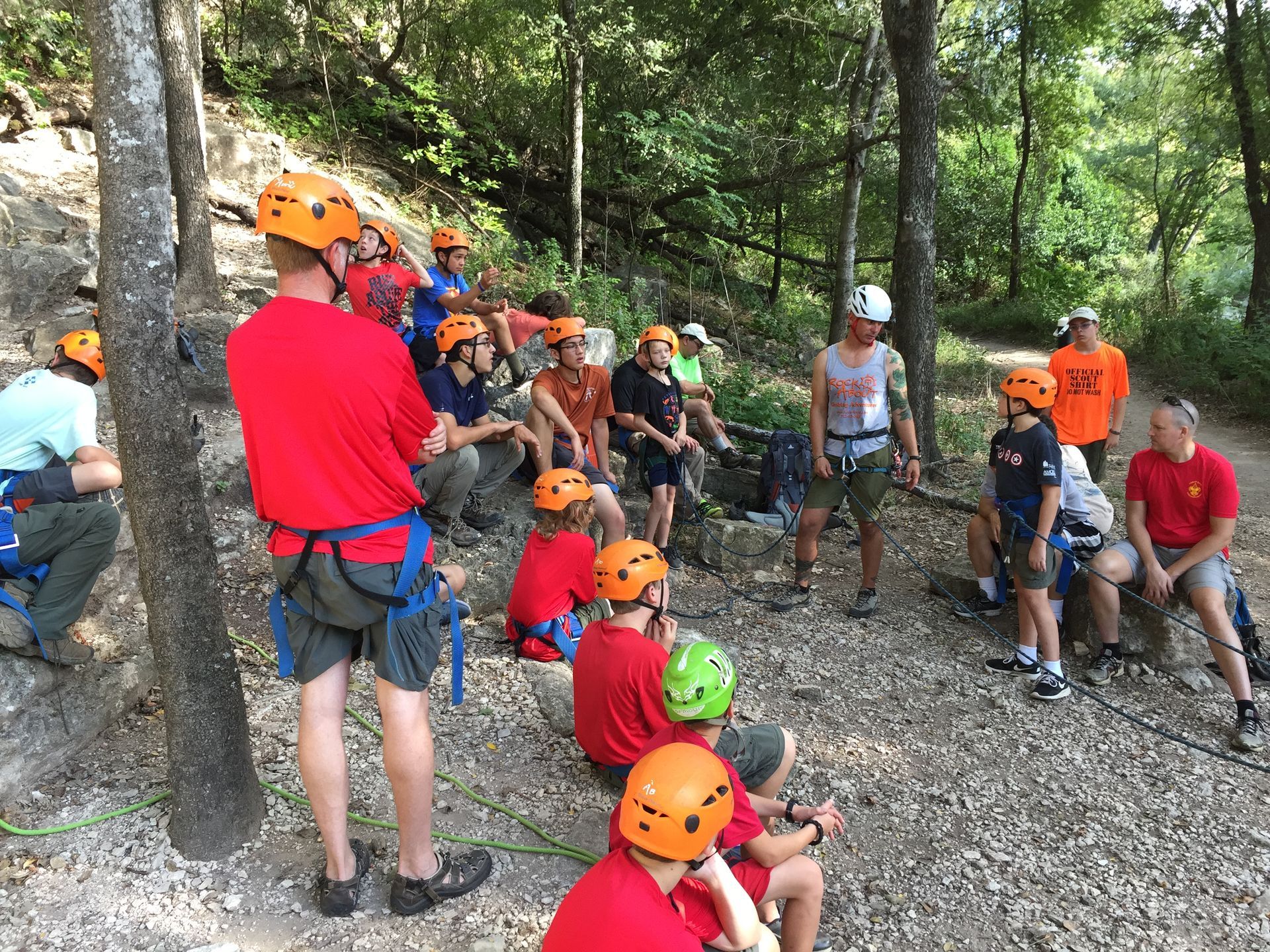
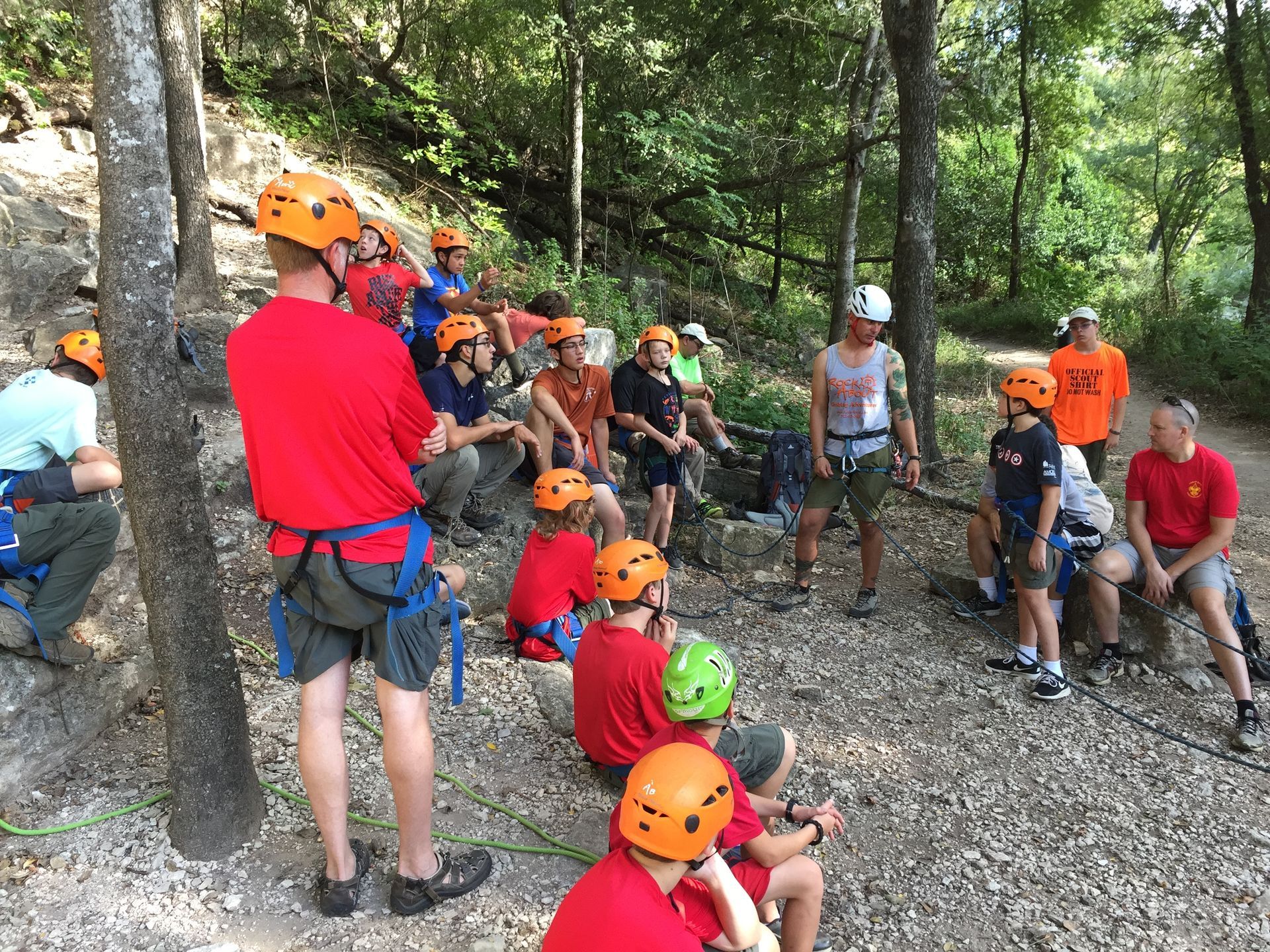
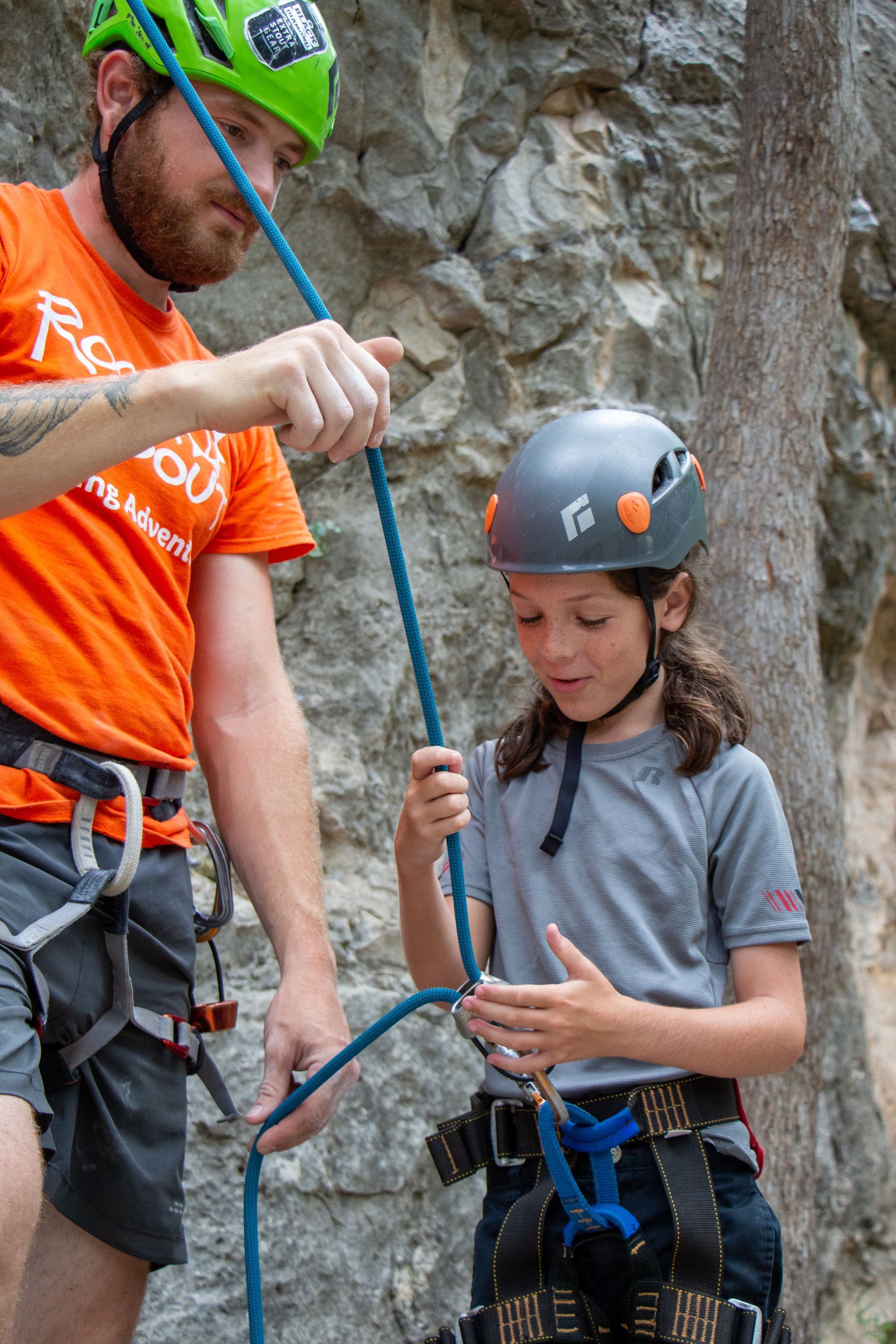
Here is something guests tell us often: the commands are not the hard part, the confidence to use them clearly is. So we drill them early and out loud. As one climber described their day with us, they spent time up front "learning how to tie in, check our partner's equipment, and learning the commands and responses to ensure there was no confusion."
That is the whole point. By the time you are climbing, the calls are second nature, your partner check is done, and nobody is guessing. Rock-About has guided Central Texas climbers since 2001, every guide is AMGA-certified, and clear communication is built into the first hour of every course, from your first day of beginner climbing onward. If you want the broader safety picture, our climbing safety guide and our five tips for staying safe while climbing both build on these calls.
Frequently Asked Questions
What are the climbing commands?
The standard set is: On belay and Belay on, Climbing and Climb on, then rope calls like Slack, Up rope, and Take, then Ready to lower and Lowering, and finally Off belay and Belay off. The safety calls are Falling, Watch me, and Rock. Each command has a required response.
What does "on belay" mean?
"On belay?" is the climber asking the belayer, "are you ready to catch my fall?" The belayer answers "Belay on" once the rope and belay device are set and they are giving the climber their full attention. Nobody climbs until that exchange is complete.
What do you say before climbing?
The four-part start sequence: the climber says "On belay?", the belayer answers "Belay on," the climber says "Climbing," and the belayer confirms "Climb on." Only then does the climber leave the ground.
What does "rock" mean in climbing?
"Rock" is the warning that something is falling, whether a stone, a piece of gear, or anything else. If you hear it, immediately press in toward the wall, keep your helmet on, and do not look up. It is the one command everyone within earshot must react to.
Are climbing commands the same indoors and outdoors?
The core commands are identical. Outdoors you add backups because wind and distance make voices hard to hear: put your partner's name in front of each call, agree on rope-tug signals, and use radios on long routes. The Beginner Rock Climbing Course covers the outdoor version directly.
Learn the Calls on Real Rock
Knowing the climbing commands on paper is a great start. Saying them with confidence, at the base of a real route, with a partner who answers back, is what makes them stick. On the Beginner Rock Climbing Course you will run the full sequence with an AMGA-certified guide, climb real Central Texas rock, and walk away fluent in the short, clear language that keeps every climber safe. Ready to take the next step? Our Lead Rock Climbing Course builds on these calls for the more demanding communication of lead climbing.