5 Beginner-Friendly Routes at Austin's Barton Creek Greenbelt

June 29, 2026

If you've been looking up outdoor rock climbing near me and you live anywhere around Austin, the answer is closer than you think. The Barton Creek Greenbelt is the closest real outdoor climbing to downtown, limestone cliffs threaded into a shaded canyon, a short walk from a city street. You don't have to drive to West Texas or book a weekend trip to touch real rock for the first time. You can do it on a weekday afternoon.

This guide is written for first-timers: people who have maybe pulled on plastic at a gym a couple of times, or never climbed at all, and want to know where on the Greenbelt is actually beginner-appropriate, and what to expect when you get there. Below are five beginner-friendly routes and areas, what makes each one approachable, and the gear, access, and safety basics you need before you go.

A quick, honest note up front: outdoor climbing has real consequences that a gym doesn't. The fastest, safest way to start is with a guide who brings the gear, sets the anchors, and keeps you on terrain that matches your level. If that sounds like you, our guided beginner rock climbing course is built for exactly this, first-timers on the Greenbelt and nearby crags, all equipment included. More on that below.

What "beginner-friendly" actually means on the Greenbelt

The Greenbelt is Edwards limestone, hard, water-carved rock full of pockets, ledges, and the occasional overhang. Routes are graded on the Yosemite Decimal System (YDS). For outdoor beginners, that generally means:

  • 5.5-5.8 is the comfortable beginner band, lower-angle faces, plenty of holds, forgiving footwork.
  • 5.9-5.10 starts to get vertical and technical; doable for fit first-timers on toprope but not the place to start the day.
  • 5.11 and up is for experienced climbers, listed here only so you know to skip those lines while you're learning.

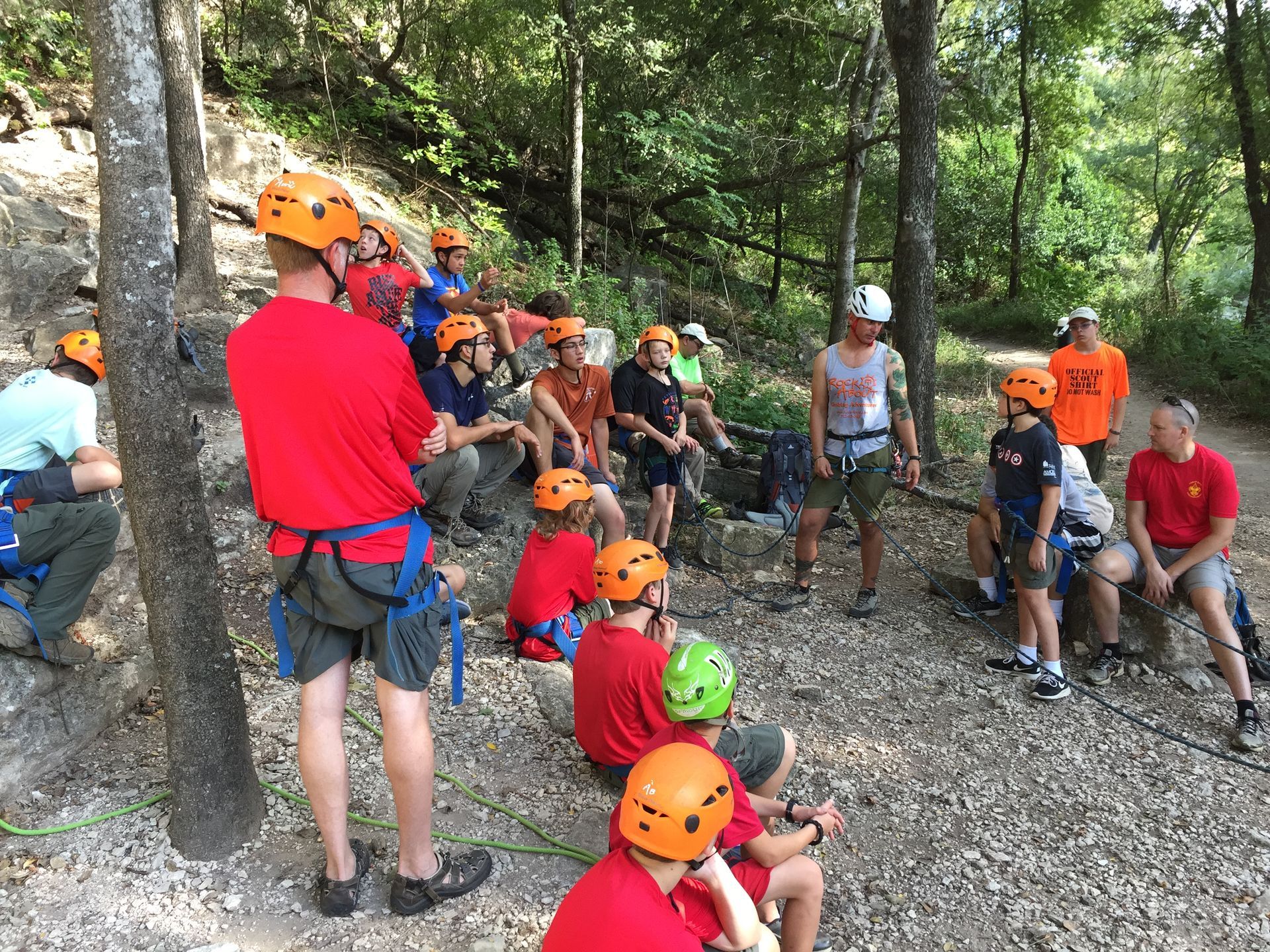
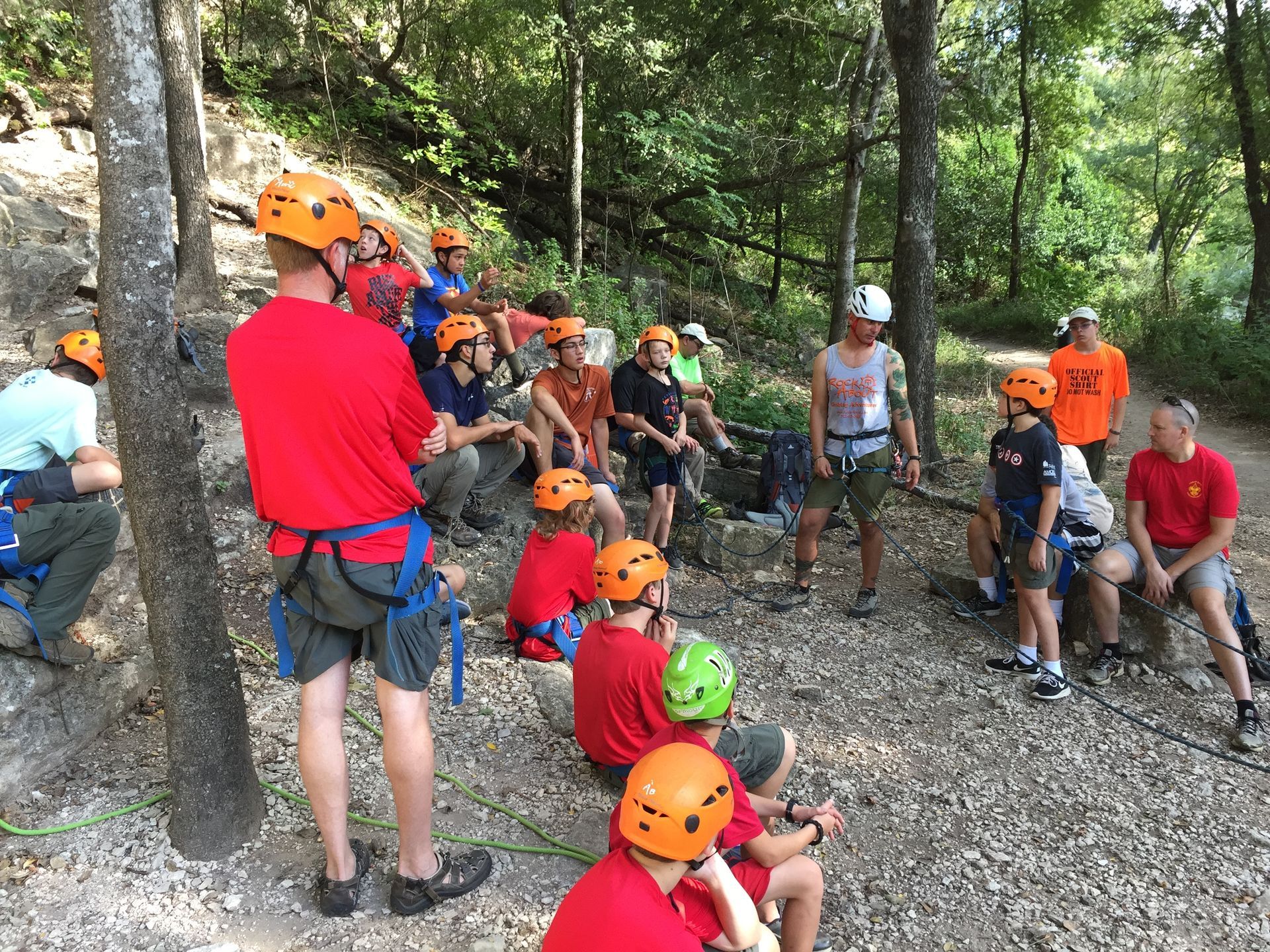
Most beginners climb these on toprope, meaning the rope runs up to an anchor at the top of the route and back down, so a fall is short and controlled. Setting that anchor safely is the part that takes training, which is why most first-timers go out with a guide for at least their first few sessions.

Grade note: Specific route names and YDS grades at the Greenbelt vary between guidebooks (Mountain Project, theCrag) and shift as routes are re-bolted or re-rated. Treat the areas and their general character as the reliable part; verify exact grades and proper names before you commit them to the live page.

The 5 beginner-friendly routes & areas

1. The easy lines at Gus Fruh Wall

Where: Gus Fruh, off Barton Hills Drive (the Barton Hills Drive trailhead). The approach is a bit longer than Seismic, roughly a half-mile walk in on the marked path, but it rewards you with shaded cliffs and a swimming hole right there for after.

Why it's good for beginners: Gus Fruh is the Greenbelt's best-known classic-line cliff and it stays noticeably cooler in the hot months thanks to the shade and the creek. The wall holds a range of routes; the lower-graded, lower-angle lines on the left/easier end of the wall are the place to start. Because Gus Fruh tends toward shorter, more technical, problem-solving climbs, it's a great spot to learn how to read limestone, finding pockets and edges rather than just hauling on big jugs.

Beginner route to look for: Hank's Left (5.7), a well-traveled moderate line on the Hank's section of the wall.

Heads up: Parking on Barton Hills Drive is limited, arrive early. After heavy rain the limestone gets slick and brittle, and the easy slabs are exactly where that bites first, so check conditions before you go.

2. The introductory routes at Seismic Wall

Where: Seismic Wall, the most popular climbing area on the Greenbelt. Reach it from the Spyglass Drive access point (parking near Tacodeli/Torchy's on Spyglass) or the Loop 360 trailhead, then a short hike from the lot. The approach is shorter than Gus Fruh, which makes it an easy first outing.

Why it's good for beginners: Seismic has a vertical limestone face with a shaded base and a wide spread of routes, the wall as a whole runs from about 5.8 up to 5.12, so the easier 5.8 lines at the lower end give beginners a real route to climb while stronger partners can work harder lines on the same wall. That mix is ideal for a mixed-ability group or a class: everyone climbs the same crag, at their own level, without splitting up.

Beginner route to look for: Start on the easier end of the wall, where the more moderate lines sit around 5.9, for example, Over Easy (5.9) or Short People (5.9).

Heads up: Because it's the most popular wall on the Greenbelt, Seismic gets busy on nice weekends. Go early, or go midweek, for a calmer first experience.

3. A low-angle slab session (toprope-friendly faces)

Where: Lower-angle slab and face sections found along the main Greenbelt walls (Gus Fruh and Seismic both have them at their easier ends).

Why it's good for beginners: Slab climbing, lower-angle rock you climb with balance and footwork rather than upper-body strength, is the single best terrain for a first-ever outdoor climb. There's less to be afraid of, your feet do most of the work, and it teaches the trust-your-shoes habit that makes everything else easier later. If your very first time on rock is anywhere, it should be a low-angle slab on toprope with someone experienced managing the rope.

Beginner route to look for: [VERIFY: named beginner slab/face route + grade, confirm on Mountain Project/theCrag]. The terrain type (low-angle, toprope-protected slab) is the reliable recommendation here even before a specific name is verified.

Heads up: Slab is the first thing to turn greasy when the rock is damp. This is a dry-conditions-only recommendation.

4. A first taste of bouldering at Gus Fruh

Where: Gus Fruh's bouldering, the area is known for a mix of bouldering and roped climbing, with boulders set among the shaded cliffs and pools.

Why it's good for beginners: Bouldering means short, ropeless climbing on low rock over a crash pad, no harness, no belay partner, no anchor knowledge needed. For an absolute first-timer it's the lowest-barrier way to touch real outdoor rock and figure out whether climbing clicks for you. Low, easy problems near the ground let you try moves, fall a foot or two onto a pad, and try again.

Beginner problem to look for: [VERIFY: easy V0-V1 boulder name at Gus Fruh, confirm on Mountain Project]. Until then, steer beginners to "the low, easy problems near the ground" and emphasize a crash pad + a spotter.

Heads up: Even low boulders need a pad and a spotter, landings on the Greenbelt are rocky and uneven. This is one to do with someone who's done it before.

5. A guided multi-route loop (Gus Fruh + Seismic in one outing)

Where: Both walls in a single session, with a guide, Spyglass-side Seismic and Barton Hills-side Gus Fruh are close enough to combine.

Why it's good for beginners: This is less a single "route" than a smart first day. A guide sets safe toprope anchors at a couple of beginner lines, walks you through tying in, belaying, and movement, and lets you climb several easy routes across both walls so you leave having actually learned the system, not just dangled on one rope once. It's the most efficient way to go from "never climbed outside" to "I get how this works and I want to do it again."

What to book: This is exactly what our beginner rock climbing course covers, instructor-led, gear included, sized to your group and ability. It's the recommended first outing for anyone who searched rock climbing classes near me and wants outdoor rock, not a gym wall.

A note on grades and route names: Outdoor route names and grades are community-maintained and change over time. Always cross-check the latest Mountain Project or theCrag Barton Creek Greenbelt listings the day before you go, and defer to your guide's on-the-day judgment about conditions and which lines are appropriate.

What beginners need to know before they go

Gear

If you go with a guide, all the technical gear is provided. That's a big part of why guided is the easy way to start. If you're heading out with experienced friends instead, the standard kit is:

  • Climbing shoes (rentable, or your guide provides them)
  • Harness and belay device
  • Helmet, strongly recommended outdoors; loose rock and dropped gear are real
  • Chalk bag
  • A 40-60 m rope and quickdraws for sport routes, plus the anchor knowledge to use them
  • A crash pad and spotter if you're bouldering
  • Plenty of water, sun protection, and sturdy approach shoes for the hike in

What you wear: comfortable, movement-friendly athletic clothing. You don't need anything technical to start.

Access & parking

  • Seismic Wall: Spyglass Drive access (parking near Tacodeli/Torchy's) or the Loop 360 trailhead; short hike to the wall.
  • Gus Fruh: Barton Hills Drive trailhead; follow the marked path roughly half a mile to the climbing area. Parking is limited, arrive early, especially on weekends.
  • Cost: Entry to the Barton Creek Greenbelt is free. Parking can be tight, not paid, the constraint is space, not a fee.
  • The Greenbelt is managed by the City of Austin and Texas Parks & Wildlife; stick to established trails.

Safety & etiquette

  • Don't climb on wet or recently rained-on limestone. Wet Greenbelt rock is slick and brittle, and holds can break, beginners on easy slabs are the most exposed to this. Check the forecast and recent conditions before you go.
  • Wear a helmet and keep non-climbers back from the base of routes.
  • Watch for poison ivy and uneven, rocky ground at the base of the walls.
  • Leave No Trace: pack out everything, stay on established trails, don't disturb the creek or vegetation, and skip the chalk graffiti.
  • If it's your first time, go with someone who knows how to build and check anchors. This is the single biggest safety factor in outdoor climbing, and it's not something to learn from a video the night before.

Bringing kids? Start them with a camp built for it

If you're a parent eyeing the Greenbelt for your kids rather than yourself, the routes above can absolutely work for young climbers, but the safest, most fun on-ramp for children is a program designed around them. Our kids rock climbing camp puts young climbers on beginner-appropriate outdoor rock with instructors who specialize in coaching kids, all gear included. It's the same Greenbelt rock, sized and supervised for younger climbers.

Beginner FAQ

Where can beginners go rock climbing outdoors near Austin?

The Barton Creek Greenbelt is the top spot for outdoor beginners, limestone cliffs and easy access just minutes from downtown. The easier lines at Gus Fruh and Seismic Wall are manageable for first-timers, especially on toprope with a guide. Nearby beginner-friendly areas include Reimers Ranch and Enchanted Rock.

Do I need a guide to climb outdoors as a beginner?

You don't have to, but it's strongly recommended for your first outings. A guide brings the gear, builds and checks the anchors, picks routes that match your level, and teaches you to belay safely, the parts of outdoor climbing that carry real risk if you get them wrong. Our beginner rock climbing course is built for exactly this.

What should I bring for a first outdoor climb at the Greenbelt?

Comfortable athletic clothing, plenty of water, sun protection, and sturdy shoes for the approach hike. If you're with a guide, technical gear (shoes, harness, helmet, ropes) is provided. If you're climbing with friends instead, you'll also need climbing shoes, a harness, a belay device, a helmet, a chalk bag, and, for sport routes, a 40-60 m rope and quickdraws.

Is climbing at Barton Creek Greenbelt safe for beginners?

Yes, when you approach it with caution: climb on dry rock only, wear a helmet, use toprope, and go with someone who can build and check anchors. The biggest avoidable hazards are wet limestone (slick and brittle) and unmanaged anchors, both of which a guide handles for you.

How hard are the climbs at the Greenbelt?

Routes range widely. Seismic Wall as a whole runs roughly 5.8 to 5.12, and Gus Fruh holds a similar spread; beginners stick to the easier lines (around 5.5-5.8) at the more moderate ends of each wall. Verify specific route grades against current Mountain Project or theCrag listings before you go.

Is it free to climb at the Barton Creek Greenbelt?

Yes, entry to the Greenbelt is free. Parking can be limited, so arrive early, but there's no entry fee for the park itself.

What's the best time of year for a beginner to climb the Greenbelt?

Spring and fall offer the most comfortable conditions, mild temperatures and lower humidity. Summer gets hot, so go early in the morning, and Gus Fruh's shade makes it the better summer choice. Avoid the days right after heavy rain, when the rock is slick.

Can kids and families climb at the Greenbelt?

Absolutely. Many families climb the easier Greenbelt lines, and for younger kids a structured program is the safest start, see our kids rock climbing camp.

Ready to climb? Start with a guided beginner session

The Greenbelt is the easiest place in Austin to go from never climbed outside to I want to do this every weekend, and the fastest, safest first step is a guided session where the gear and anchors are handled for you.

Book our beginner rock climbing course, instructor-led, all equipment included, sized to your group.

Bringing kids? See the kids rock climbing camp.

Want the full lay of the land first? Read our complete Barton Creek Greenbelt climbing guide for the deep dive on Gus Fruh and Seismic Wall, or our guide to rock climbing in Austin for every outdoor spot around the city.

Kids climbing outdoors with a guide near Austin
June 29, 2026
A parent's 2026 guide to kids and teen rock climbing camps in Austin: ages, a typical day, safety, gear, and how to choose the right outdoor camp.
Climb in Texas
February 27, 2026
Discover the best time to climb in Texas. Learn why fall offers ideal conditions, how spring compares, and tips for winter and summer climbing.
Climbing at Enchanted Rock
February 26, 2026
Climb Enchanted Rock’s 300+ granite routes in Texas Hill Country. Get best seasons, rope tips, grades, and book guided tours with AMGA-certified experts.
A group of people are posing for a picture in front of a rock wall.
February 20, 2026
Thinking about a climbing camp for your child? Learn what parents should know about safety, benefits, and choosing the right program for your kid.
Person rappelling down a granite rock face, wearing safety gear, in a green, rocky landscape.
January 19, 2026
Discover Rock-About’s limited-time weekday rock climbing deals in Texas. Save 10% on beginner courses and rappelling adventures this fall, winter, and spring.
Climber on limestone boulder at McKinney Falls State Park
December 18, 2025
Discover the best bouldering spots at McKinney Falls State Park in Austin, Texas. Explore routes, access tips, and safety advice for every climbing level.
Austin Greenbelt Climbing
December 18, 2025
Discover the best climbs at Austin’s Barton Creek Greenbelt, including Seismic Wall and Gus Fruh routes, gear tips, and access info.
Reimers Ranch Climbing
December 18, 2025
Discover the best climbing routes at Reimers Ranch near Austin. Learn local tips, must-climb walls, and expert advice for your next Texas climbing trip.
Rock Climbing in Central Texas
October 15, 2025
Explore the best rock climbing in Central Texas — from Enchanted Rock to Reimer’s Ranch. Routes, maps, gear, safety tips, and community insights.
Rappelling vs Abseiling
September 30, 2025
Confused about Rappelling vs Abseiling? Learn the difference, history, and safety tips — plus try it with Rock About Climbing Adventures in Texas.