Lake Travis Deep Water Soloing: Full Pool Conditions Just Reopened Areas We Haven't Guided Since 2018
Quick answer: After recent rain, Lake Travis has hit full pool for the first time since July 2019. All of our climbing areas stayed open through the rain, since the heaviest flooding happened south of where we operate. The full lake has reopened DWS terrain we haven't been able to guide since 2018, so we're shifting our deep water soloing trips from the east side of Pace Bend toward the west side of Pace Bend and new ground upriver near the Narrows boat ramp. Trips are running now, no experience needed.
We've been guiding deep water soloing on this lake long enough to know what a full pool actually means: routes and drop zones that have been sitting a few feet underwater, or too shallow to jump into safely, come back into play. This is the first time we've had access to some of this terrain since 2018.
Why Is Lake Travis at Full Pool, and Which Areas Does It Open Up?
Recent rain filled Lake Travis all the way to full pool, 681 feet of elevation, for the first time since July 2019. The flooding that made news was south of our operating area, and every one of our climbing areas stayed open the entire time. A full lake means cliffs and coves that need real depth underneath them to be safe finally have it.
That's why we're moving our trips. For the past several years, most of our DWS routes have concentrated on the east side of Pace Bend, since that's where the water stayed deep enough. With the lake back up, we're now guiding the west side of Pace Bend regularly, along with areas upriver near the Narrows boat ramp that we haven't had access to since 2018. If you climbed with us on the east side in past summers, this season looks different, and in our opinion, better.

How Deep Does the Water Need to Be for Deep Water Soloing?
Lake Travis needs to be at 655 feet or higher for the coves we guide to be safe, and this year's full pool puts us well clear of that line at every location we're currently running trips to, including the newly reopened areas.
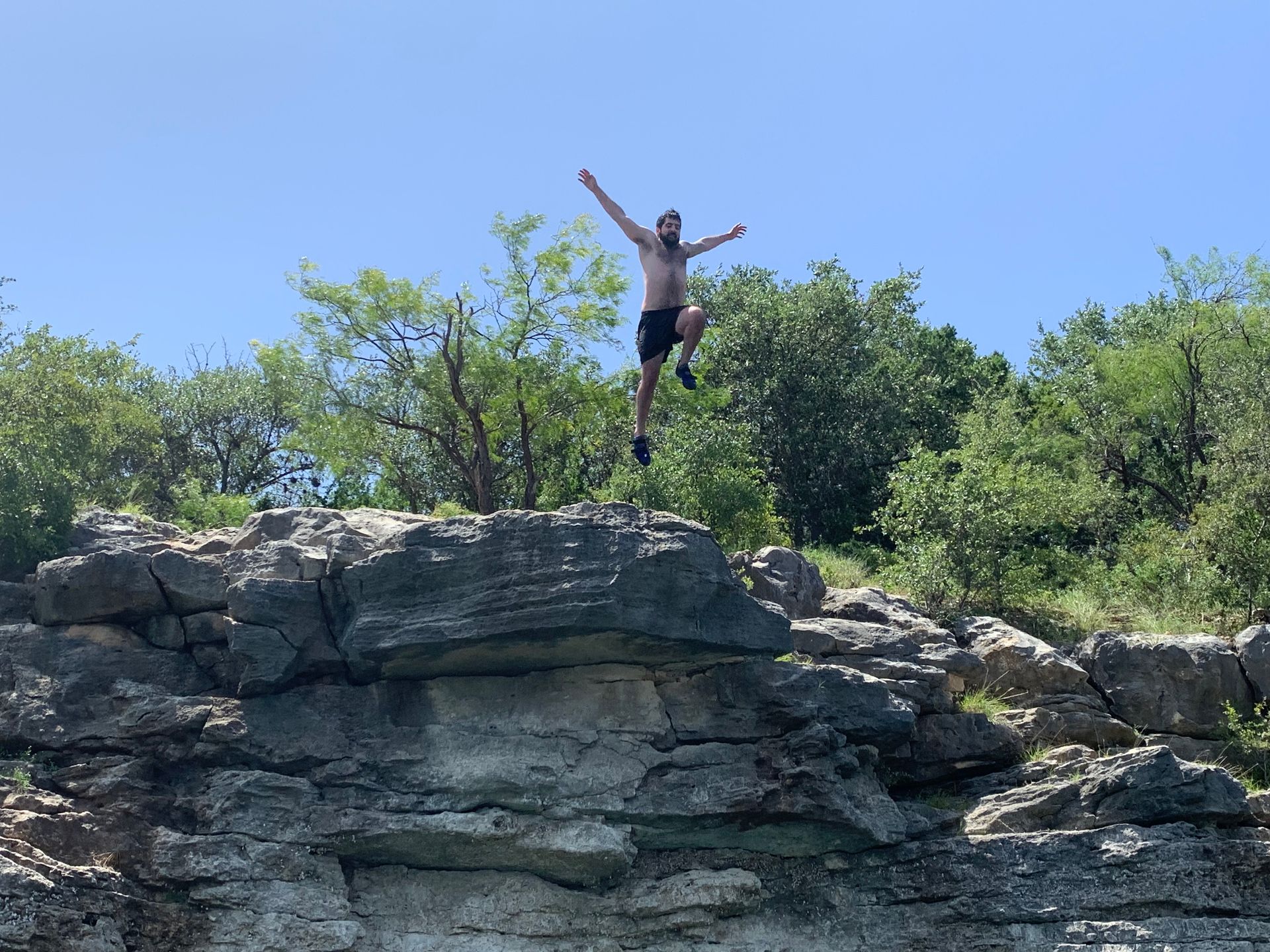
Deep water soloing means climbing limestone cliffs above the lake with no rope. If you fall, and most people do at some point, you land in the water. That only works if the water underneath is deep enough to land in safely, which is the entire reason DWS is a conditions-dependent sport in a way regular rock climbing isn't. Our guides check lake levels before every trip, not just at the start of the season, and we assess each drop zone in person before anyone climbs it. Some of our best spots are only reachable by boat, which is part of why we're the only guided DWS operator in the United States. Nobody else is set up to get you to this terrain.
Do I Need Experience to Try Deep Water Soloing?
No experience is needed. We handle the boat, the safety briefing, and the drop zone assessment, and our guides walk you through fall technique before you climb anything.
If you're newer to climbing altogether, DWS is a genuinely approachable way to start. There's no harness, no belay system to learn, and no rope work. You climb, and if you come off, you land in the lake. Most people find that less intimidating than a rope and harness. If you've done one of our other trips before and are curious about DWS, this is a good summer to try it, since the lake hasn't given us this much terrain to work with in years.
Book a Deep Water Soloing Trip
Conditions like this don't last forever. Lake levels shift, and when they drop, some of this terrain goes back underwater until the next time it fills. Book a guided DWS trip at
rock-about.com, or email
info@rock-about.com if you want to ask which cove we're running before you book.